
Head of Business Development
Table of Contents
Part 1 of 5: The Commerce Modernization Playbook
Every quarter you delay modernization, your legacy platform quietly extracts a tax – on speed revenue, and your customers’ patience.
Most enterprise retailers didn’t choose a monolith. They inherited one. A platform that was “best-in-class” a decade ago, extended year after year with patches, plugins, and workarounds until it became the single most expensive thing the company maintains and the single biggest obstacle to growth.
Here’s what the monolith tax looks like.
The Hidden Costs Nobody Budgets For
1. Script Bloat Is Killing Performance
Open any legacy storefront in a browser dev console and count the third-party scripts. Fifty? Eighty? Over a hundred? Each one adds milliseconds to page load, creates a potential security vulnerability, and makes every front-end change feel like defusing a bomb. When your Largest Content-ful Paint (LCP) creeps past 4 seconds, you’re not just failing a Google metric, you’re losing customers mid-scroll.
2. Impairment Charges Are Inevitable
When acquisitions or digital brand integrations sit on top of incompatible legacy stacks, the write-downs eventually come. Hundreds of millions in impairment charges aren’t hypothetical; they’re happening right now across retail because platforms that were never designed to coexist were forced to.
3. Innovation Paralysis Slows Growth
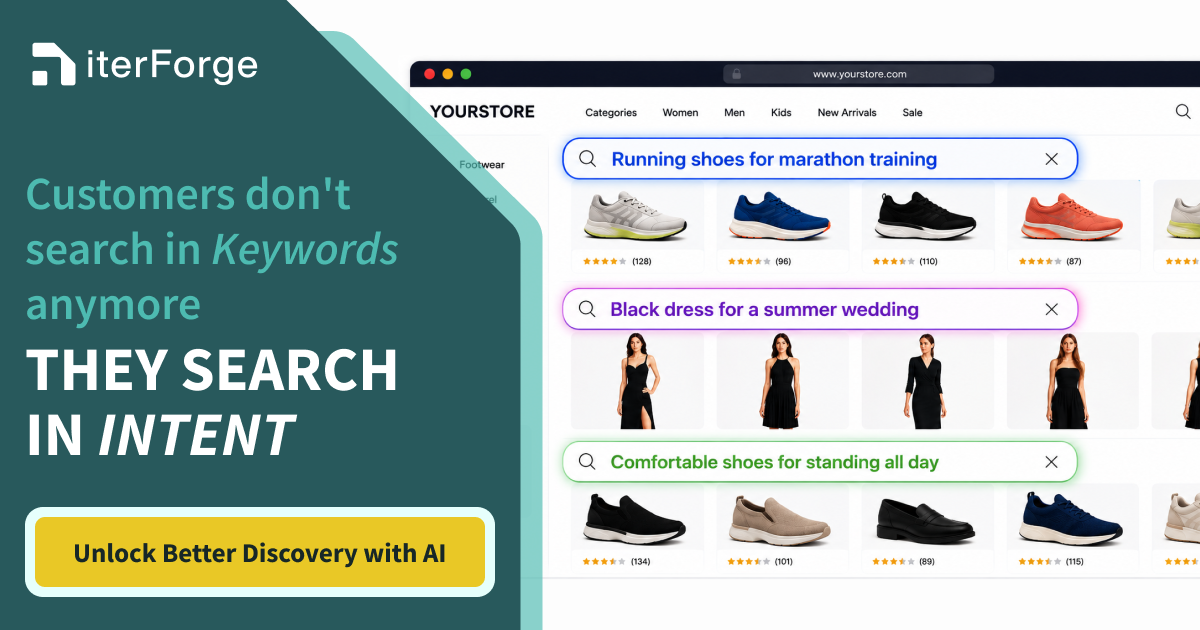
Your competitors are shipping AI-powered search, personalized recommendations, and conversational shopping experiences. You’re waiting 6 months for a homepage banner change to clear the release queue. The monolith doesn’t just slow you down, it makes “fast” structurally impossible.
The Multi-Brand Trap: Where Costs Multiply
The tax gets steeper when you operate multiple brands.
Most legacy platforms were built for one storefront. When retailers expand to three, five, or ten brands, the options are ugly: run separate instances of the same monolith (expensive, fragmented) or force every brand onto one rigid template (cheap, but your luxury brand now looks identical to your value brand).
Neither works. What multi-brand retailers need is a unified backend – one commerce engine, one catalog, one order management system, one customer data platform – with a composable front-end that lets each brand own its own experience.
The Modern Alternative: Composable Commerce
This is the promise of headless and composable architecture: the brand team for your luxury line gets a premium, immersive storefront. The team running your value brand gets a fast, conversion-optimized experience. The trend-forward brand targeting Gen Z gets bold visuals and mobile-first design. All of them share the same product data, inventory, pricing logic, and fulfillment engine underneath.
Why This Model Wins
Brand differentiation at the experience layer. Operational efficiency at the infrastructure layer. And the ability to launch or rebrand a storefront in weeks, not years.
The Real Question Isn’t “Should We Modernize?” It’s “Can we not afford to?”
Every major retailer with legacy commerce debt is facing the same math. The platform that got you to $1B in digital revenue is not the platform that gets you to $2B. The front-end hasn’t evolved with the customer’s mobile, they expect sub-2-second loads, they want AI that understands what they’re looking for, and they’ll abandon your site for a competitor who delivers it.
The window to modernize isn’t infinite. Holiday deadlines don’t move. Customer expectations don’t pause. And your competitors are already rebuilding.
The monolith tax is real. The only question is how long you’re willing to keep paying for it.
But here’s the thing, you don’t need a multi-million-dollar re-platform to start fighting back. The smartest move? Know exactly where you stand before you spend a dollar on transformation.
In our next article, we will share why a Digital Experience Audit is the highest-ROI first step most retailers skip and how it turns gut feelings about “our site is slow” into a quantified, prioritized roadmap.
Want to benchmark your experience? We can help. Follow along: “Before You Rebuild, Measure.”
What’s your experience with legacy commerce platforms? Are you mid-migration, planning one, or still trying to make the business case internally? We’d love to hear what’s working and what isn’t.
Frequently Asked Questions
What is the monolith tax? And what does it mean in ecommerce platforms?
The monolith tax refers to the extra costs and limitations businesses experience when using outdated or tightly connected ecommerce platforms. These systems often make updates, integrations, and scaling more difficult because all parts of the platform are dependent on each other. Over time, this can lead to slower innovation, higher maintenance costs, and reduced flexibility for growing ecommerce businesses.
What hidden costs come with legacy ecommerce platforms?
Legacy ecommerce platforms can create hidden expenses such as ongoing maintenance, costly custom development, slower website performance, and expensive system upgrades. Businesses may also face integration challenges with modern tools, increased downtime risks, and higher operational costs caused by inefficient workflows and outdated technology.
How can businesses reduce the costs associated with monolithic architecture?
Businesses can reduce these costs by modernizing their ecommerce infrastructure gradually instead of replacing everything at once. Common approaches include adopting cloud-based solutions, using API-driven integrations, improving automation, and separating key functions like payment or inventory management into more flexible systems. Regular performance reviews and technology updates can also help lower long-term expenses.
How do monolith systems affect ecommerce business scalability?
Monolith systems can make scaling difficult because every change or update affects the entire platform. As traffic, product catalogs, or customer demands grow, these systems may struggle to handle increased workloads efficiently. This can slow down website performance, delay feature launches, and make it harder for businesses to adapt quickly to market changes or customers’ expectations.
When should a business replace its legacy commerce platform?
A business should consider replacing its legacy commerce platform when maintenance costs continue to rise, performance issues become frequent, or the platform no longer supports business growth goals. Other signs include difficulty integrating modern tools, slow deployment of new features, poor customer experience, and limited scalability that affects long-term ecommerce performance.