
Head of Business Development
Table of Contents
Many retail, manufacturing and distribution leaders still believe that adopting AI requires a full-scale commerce platform overhaul.
It doesn’t. In fact, the highest ROI AI programs today are being deployed without replacing core commerce infrastructure. They are layered onto existing ecosystems – ERP, OMS, PIM, CRM, and storefront platforms, unlocking value faster and with far less risk.
The real challenge isn’t rebuilding platforms. It’s identifying the right AI entry points. Let’s explore what practical AI adoption looks like –
The Myth: “We Need to Rebuild Before We Can Use AI”
Enterprise commerce environments are complex.
A typical stack includes:
· Legacy ERP systems
· Custom pricing engines
· Multiple storefronts
· Distributor portals
· Regional inventory systems
· Fragmented customer data
Because of this complexity, many leaders assume AI requires:
· Commerce re-platforming
· Data warehouse rebuilds
· Full cloud migrations
· System replacements
This belief delays AI adoption by years. Meanwhile, competitors are already deploying AI in targeted layers, generating measurable returns in months.
Also read: Why Enterprise E-commerce Decisions are Still Slow
The Reality: AI Works Best as a Layer, Not a Replacement
Modern AI doesn’t need pristine, rebuilt ecosystems. It thrives when integrated through:
· APIs
· Middleware
· Data connectors
· Event streams
· Experience layers
This approach allows organizations to:
· Protect existing tech investments
· Avoid operational disruption
· Accelerate time to value
· Pilot before scaling
In other words, start with augmentation, not transformation.
How Layered AI Adoption Typically Unfolds in Enterprise Commerce
Many enterprise commerce organizations reach a similar inflection point.
They operate mature but complex digital ecosystems. The stack often includes:
· An established ERP
· A legacy or customized commerce platform
· A PIM system
· Multiple storefronts or portals
· Customer service tools
· Manual sales workflows
Over time, friction accumulates.
Common Business Frictions
· Customer service teams overwhelmed with repetitive queries
· Sales representatives spending time on low-value administrative tasks
· Large product catalogs that are difficult to navigate
· Manual quote generation slowing deal cycles
· Leadership concerned that the existing platform “isn’t AI-ready”
At this stage, many executive teams consider re-platforming.
But a full rebuild introduces significant operational risk, long timelines, and organizational disruption.
Instead of replacing the core stack, some organizations take a different approach:
They layer intelligence on top of what already works.
Phase 1: Introducing AI Into Customer Service
The first AI entry point is often customer support. Why?
Because support workflows are structured, repetitive, and data-rich – ideal conditions for AI deployment.
How the AI Layer Is Introduced
A generative AI assistant is connected to:
· Order management systems
· Shipment tracking data
· Returns policies
· Product catalogues
· Knowledge bases
The existing commerce platform remains untouched. The AI operates as an experience layer.
What Changes in Practice
Instead of routing every inquiry to a human agent, the system can:
· Respond to order status questions
· Guide customers through return eligibility
· Retrieve invoices
· Provide product specifications
· Assist with installation or usage queries
Customer service shifts from reactive ticket handling to intelligent triage and escalation.
· No rebuild.
· No migration.
· Just API orchestration and workflow integration.
Phase 2: Enhancing Product Discovery With AI
Once service workflows stabilize, attention often turns to product discovery.
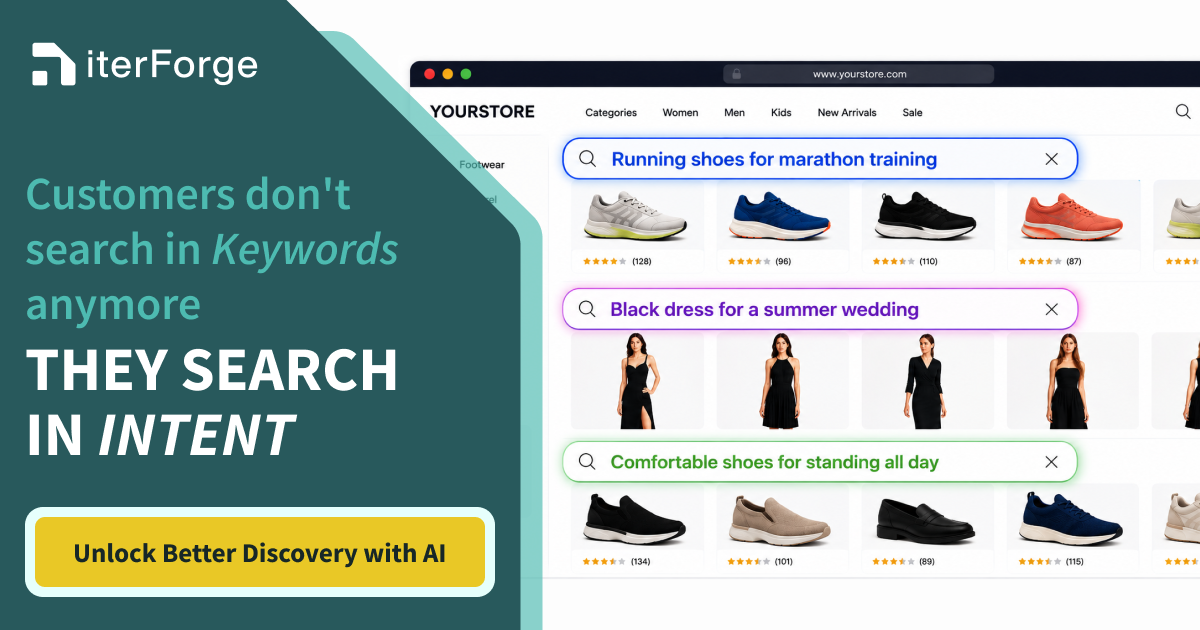
Large catalogues frequently rely on keyword-based search. This limits customers who don’t know exact product
names or codes.
Instead of replacing the search engine, organizations introduce a semantic layer.
What This Layer Includes
· Natural language processing
· Context-aware search
· Vector-based catalogue indexing
· AI-driven ranking models
The existing PIM and catalogue systems remain intact.
The AI interprets intent rather than keywords.
What This Enables
Customers can search in natural language.
· They describe problems.
· They describe requirements.
· They describe outcomes.
The system translates those inputs into relevant product recommendations.
Search evolves from transactional lookup to intelligent discovery.
Again, no re-platforming required.
Phase 3: Supporting Sales with AI Assistance
In B2B and complex commerce environments, sales teams often manage:
· Contract pricing
· Inventory validation
· Quote building
· Bundle recommendations
Much of this process is manual.
Instead of rebuilding sales systems, AI is introduced as a drafting and intelligence layer.
Before AI
· A request arrives
· A sales rep gathers pricing
· Inventory is confirmed
· A quote is manually prepared
· Internal reviews delay submission
After Introducing an AI Layer
· The request is analysed
· Relevant pricing is retrieved automatically
· Product combinations are suggested
· A draft quote is generated
· The rep reviews and refines
The human role shifts from builder to validator.
AI becomes an assistant embedded within the workflow, not a replacement system.
Evolving Beyond Features: Toward Agentic Commerce
As organizations grow more comfortable with AI augmentation, the next shift occurs.
They move from feature-level intelligence to workflow-level execution.
This is where Agentic Commerce begins to take shape.
What Changes at This Stage?
AI no longer only answers questions or drafts outputs.
It begins to:
· Monitor patterns
· Detect triggers
· Initiate actions
· Coordinate across systems
Examples of Agentic Capabilities
Replenishment Intelligence
· Observes purchasing patterns
· Anticipates reorder needs
· Prepares replenishment carts
Pricing Intelligence
· Flags potential margin erosion
· Suggests pricing adjustments
· Identifies competitive positioning risks
Order Recovery Automation
· Detects incomplete checkouts
· Generates contextual follow-ups
· Personalizes recovery incentives
These agents do not replace systems.
They operate across them.
· The ERP remains.
· The commerce platform remains.
· The CRM remains.
AI becomes the connective intelligence between them.
What This Evolution Represents
The transformation is subtle but powerful.
Organizations move:
· From isolated AI features
· To embedded AI workflows
· To coordinated AI agents
The role of AI shifts from assistance to execution support. From reactive automation to proactive orchestration. From task-level efficiency to enterprise-level capability expansion. This is the real progression modern commerce leaders are navigating. And importantly, it happens without tearing down the foundation they’ve already built.
Also Read: What Breaks When Enterprise Retail Traffic Scales
Why Layered AI Delivers Higher ROI
Let’s break down why this approach outperforms rebuild-first strategies.
1. Faster Time to Value
· Pilots launch in a few months
· No dependency on platform migrations
2. Lower Capital Risk
· Investment tied to use cases
· Easier executive buy-in
3. Incremental Scaling
· Start with service
· Expand to search
· Extend to sales
· Evolve to agents
4. Data Learning Compounds
Each AI layer improves:
· Behavioural insights
· Product intelligence
· Customer segmentation
Rebuilds delay this learning curve.
Identifying the Right AI Entry Points
So where should leaders start?
Focus on high-friction, high-volume workflows.
Proven Entry Use Cases
Customer Experience
· Virtual assistants
· Order tracking automation
· Returns processing
Revenue Growth
· AI search
· Product recommendations
· Dynamic bundling
Sales Enablement
· Quote automation
· Contract intelligence
· Cross-sell suggestions
Operations
· Demand forecasting
· Inventory optimization
· Supplier risk alerts
Start where:
· Manual effort is high
· Data already exists
· ROI is measurable
The Role of AI Product Development
Layered adoption only works with structured execution. This is where AI Product Development becomes critical. Instead of experimenting randomly, organizations must build AI like products:
Key Principles
1. Defined business KPIs
2. Embedded user workflows
3. Continuous model training
4. Governance & guardrails
5. Scalable architecture
AI success is not about models alone, it’s about productization.
Implementation Framework: A Practical Roadmap
Here’s a simplified adoption model enterprise leaders can follow.
Step 1 – Use Case Prioritization
· Map revenue vs effort
· Identify quick wins
Step 2 – Data Readiness Audit
· Catalogue APIs
· Assess data quality
Step 3 – Experience Layer Integration
· Deploy co-pilots
· Launch assistants
Step 4 – Workflow Automation
· Introduce task execution
· Connect systems
Step 5 – Agentic Expansion
· Enable autonomous agents
· Scale decision intelligence
This phased model avoids disruption while compounding value.
Key Lessons for Retail & Distribution Leaders
From multiple enterprise deployments, five truths stand out:
1. You don’t need a rebuild to start AI.
Layer first. Modernize later.
2. Customer service is the fastest ROI unlock.
High volume + structured data = quick wins.
3. Search and discovery drive immediate revenue.
Findability = conversion.
4. Sales AI delivers margin impact.
Not just efficiency but profitability.
5. Agentic Commerce is the long-term multiplier.
Execution, not just intelligence.
The Strategic Shift Already Underway
AI adoption in commerce is no longer experimental. It is operational.
Leaders who win are not those rebuilding platforms but those embedding intelligence into existing ones.
They are:
· Launching GenAI service layers
· Deploying AI discovery engines
· Enabling sales copilots
· Activating autonomous agents
All without re-platforming.
Also Read: Why Personalization Fails In Enterprise Retail
Final Thought
The future of eCommerce AI is not about replacement. It’s about augmentation. Start with use cases not
migrations. Layer intelligence where friction exists and scale where ROI proves out.
Because the enterprises seeing the greatest impact from AI today aren’t the ones rebuilding their commerce
stacks, they’re the ones making them smarter.
Frequently Asked Questions
How can AI improve product recommendations in ecommerce?
AI helps ecommerce businesses deliver smarter product recommendations by analyzing customer behavior, browsing history, purchase patterns, and preferences in real time. This allows online stores to suggest products that are more relevant to each shopper, improving customer experience and increasing conversions. AI-driven recommendations are also an important part of agentic commerce, where automated systems help customers make faster and more personalized buying decisions.
What are popular AI tools for automating customer service in online stores?
Popular AI customer service tools include chatbots, virtual shopping assistants, automated email responders, and helpdesk automation platforms. These ecommerce AI tools can answer common customer questions, track orders, recommend products, and provide 24/7 support without requiring constant human involvement. Many ecommerce businesses also integrate AI customer support tools with platforms like salesforce to manage customer interactions more efficiently.
Which AI platforms offer visual search features for ecommerce websites?
Several AI platforms provide visual search technology that allows customers to upload images and find similar products online. These tools use image recognition and machine learning to improve product discovery and shopping convenience. Ecommerce platforms and integrations such as optimizely can support AI-powered search experiences that help customers quickly find relevant items using photos instead of text searches.
Where can I find AI-powered inventory management solutions for ecommerce?
AI-powered inventory management solutions are available through ecommerce software providers, supply chain platforms, and retail technology companies. These systems help businesses forecast demand, track stock levels, reduce overstocking, and automate replenishment decisions. Many advanced inventory tools also connect with an salesforce oms to improve order tracking and inventory accuracy across multiple sales channels.